What a Host Sends a Guest Who Asks
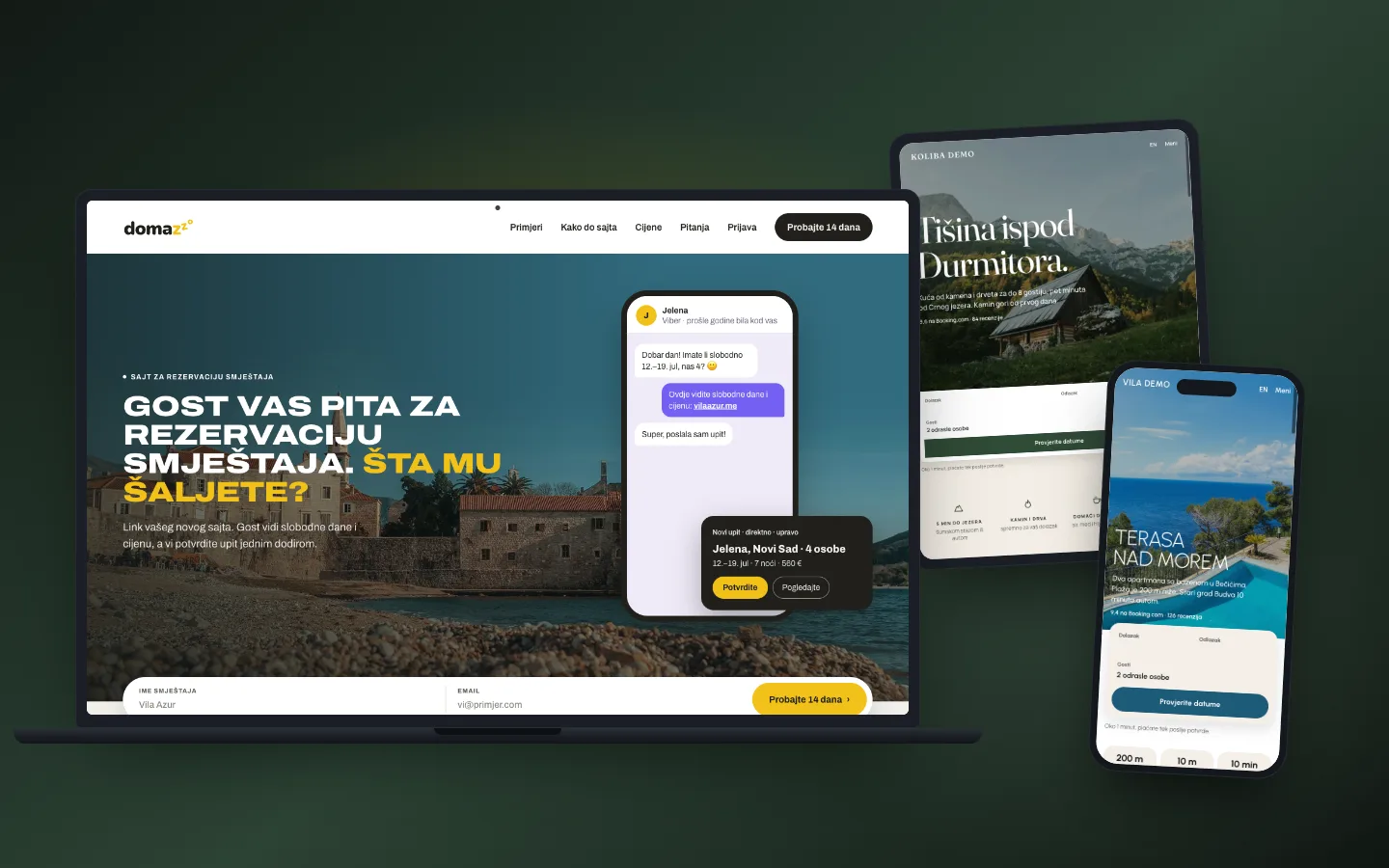
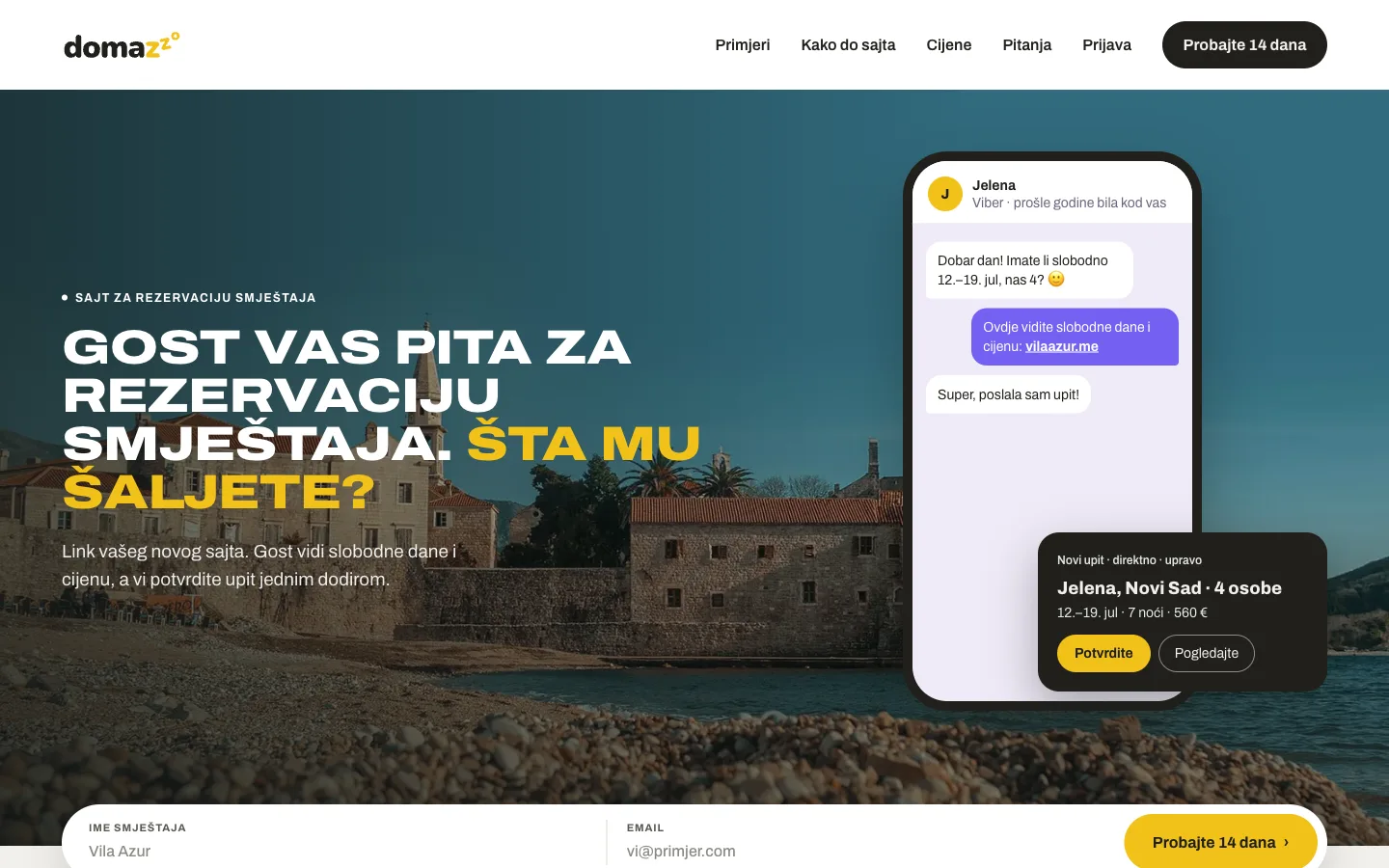
Every host knows this conversation by heart. A guest from last summer writes on Viber: "Do you have anything free July 12 to 19, for four of us?" The host opens Booking, checks the notebook, replies. The guest then books through Booking anyway, because that's where they see a price and a button.
Seven nights at €80 comes to €560, and about €84 of that goes to the platform. For a guest the host already had.
Domazzo is our answer to that problem: a website link the host sends instead of a Booking link. The guest sees open dates and the price, sends an inquiry, and the host confirms it with one tap on their phone. Booking and Airbnb stay in place. Only the direct guests stop going through them.
One Calendar for Every Channel
A host's biggest fear about having their own website is a double booking. That's why the calendar is the first part of the system, not an add-on.
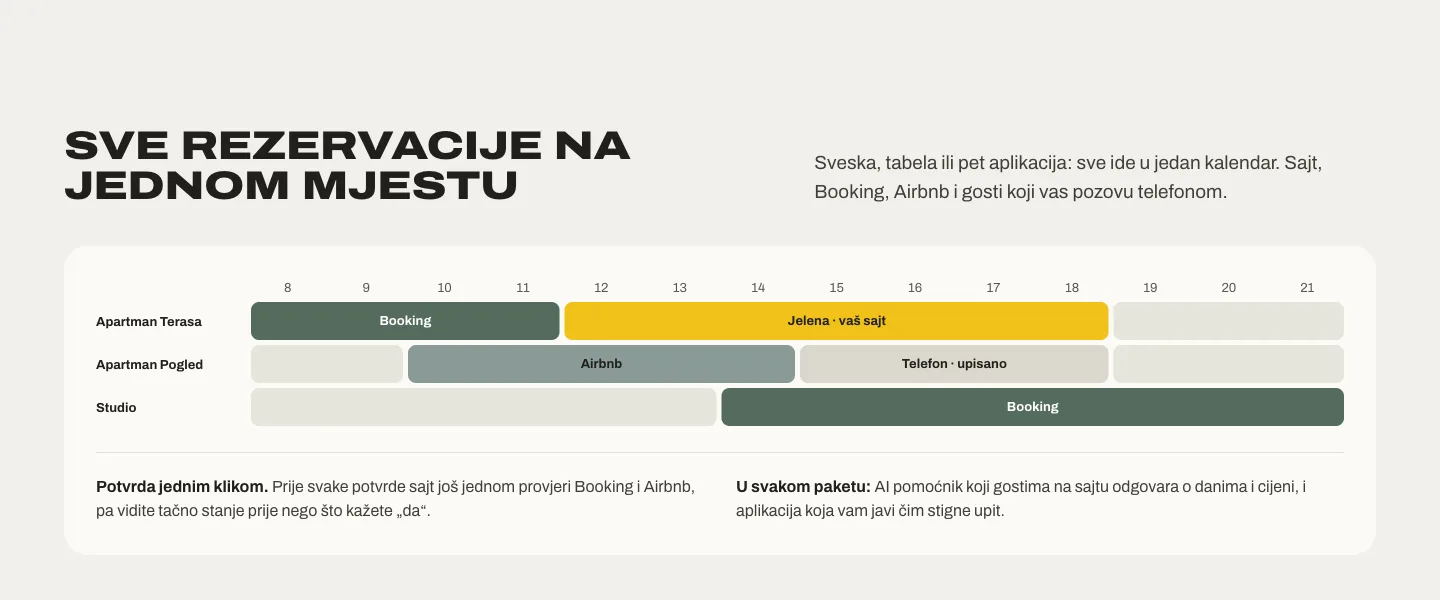
Each unit has a single calendar that every channel feeds into:
- Booking.com and Airbnb are read through an iCal link, the calendar feed both platforms provide. The system refreshes them every 15 minutes and sends its own calendar back, so the platforms also see dates taken through the website.
- Website inquiries block nights only once the host confirms them. While they wait, the admin shows where they overlap.
- Phone bookings are entered by hand, in the same calendar.
Before an inquiry is saved, the system checks Booking and Airbnb for that unit once more, and it does the same at confirmation. The host sees the real picture before saying "yes."
Stays are counted in nights: the departure day is free for the next arrival. If a villa is split into apartments, booking the whole villa blocks every apartment, and the other way around.
Five Themes, One Engine
Hosts don't pick a template from a catalog of a hundred. They pick one of five themes, and each is built for one type of property: seaside apartments, a mountain cabin, a villa with a pool, an old-town apartment and an ethno village by the river.
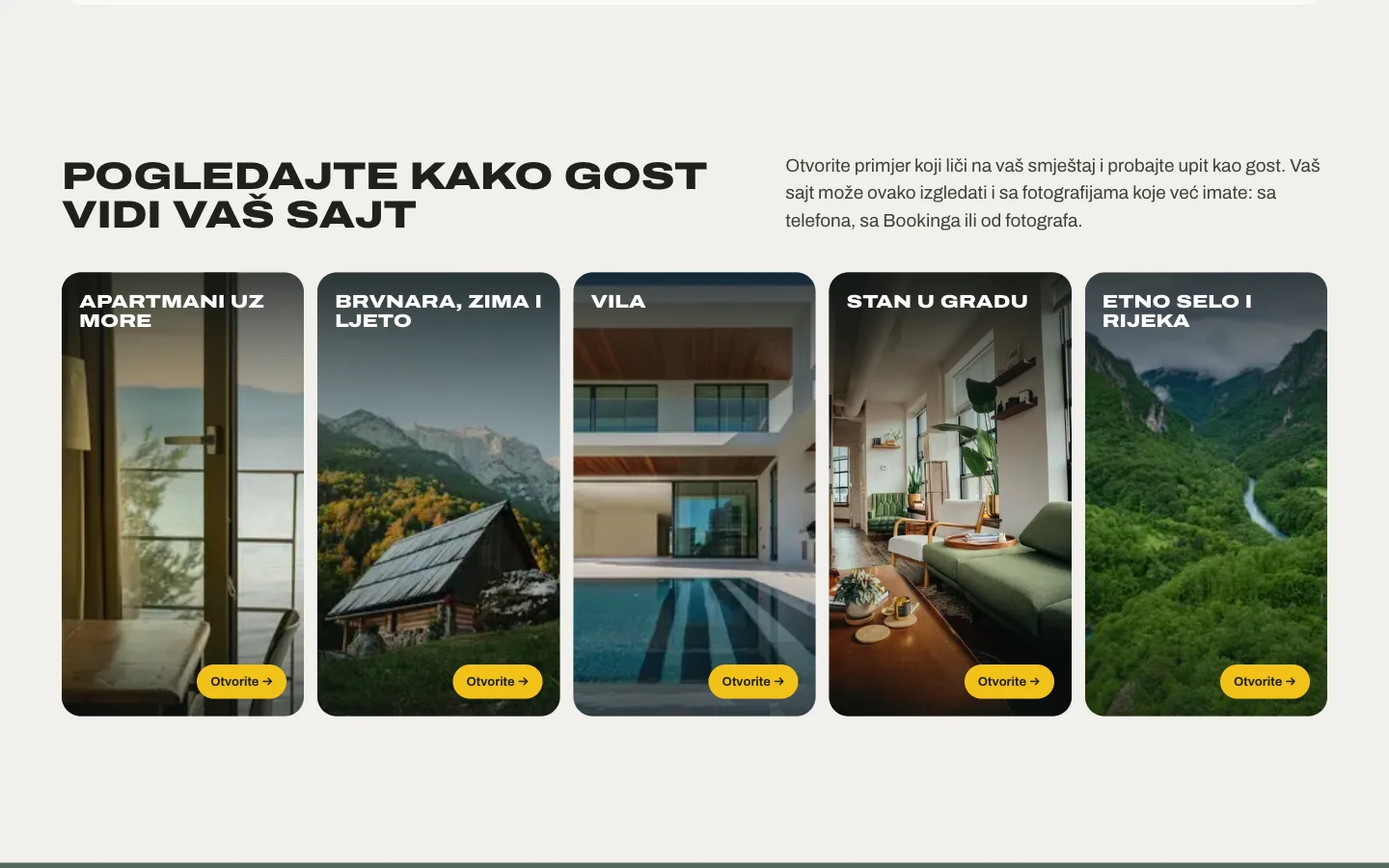
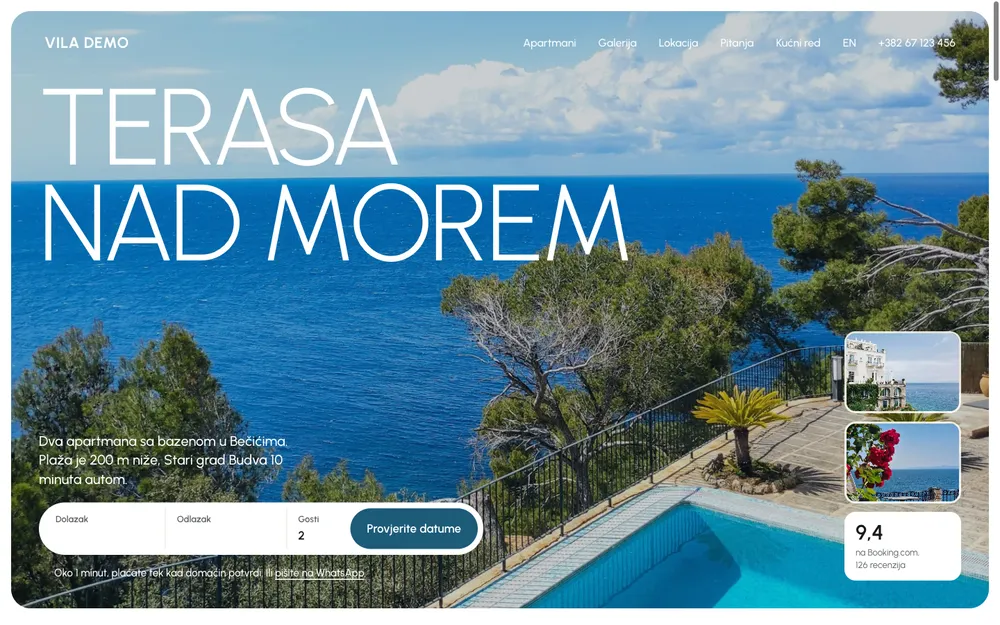
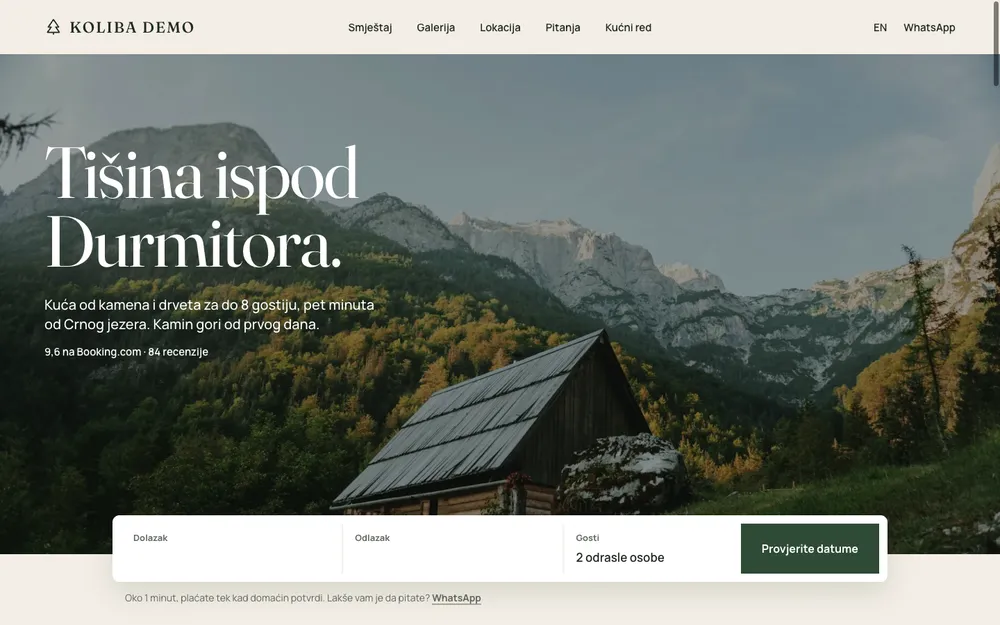
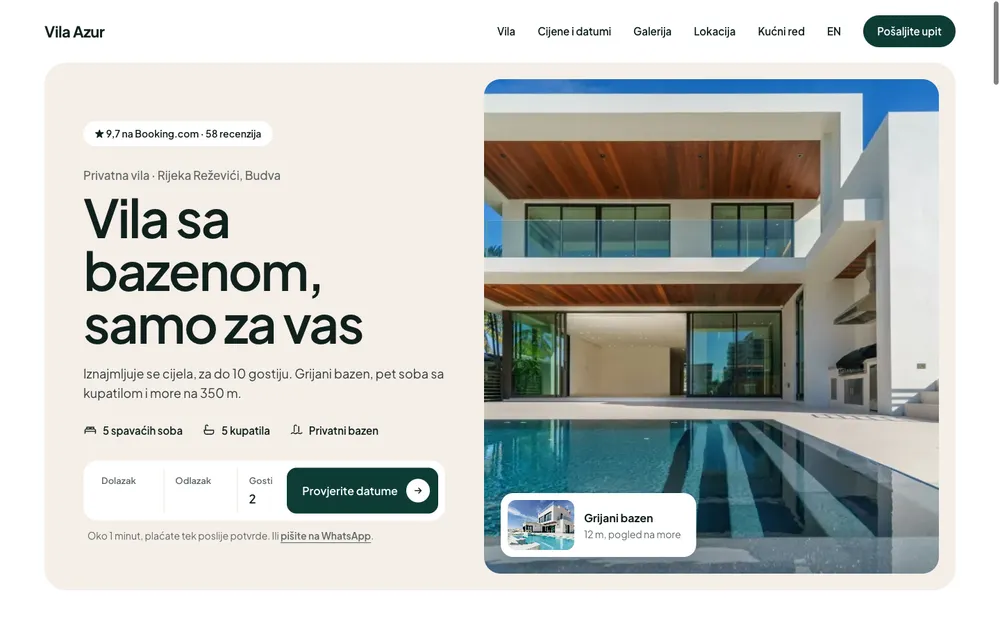
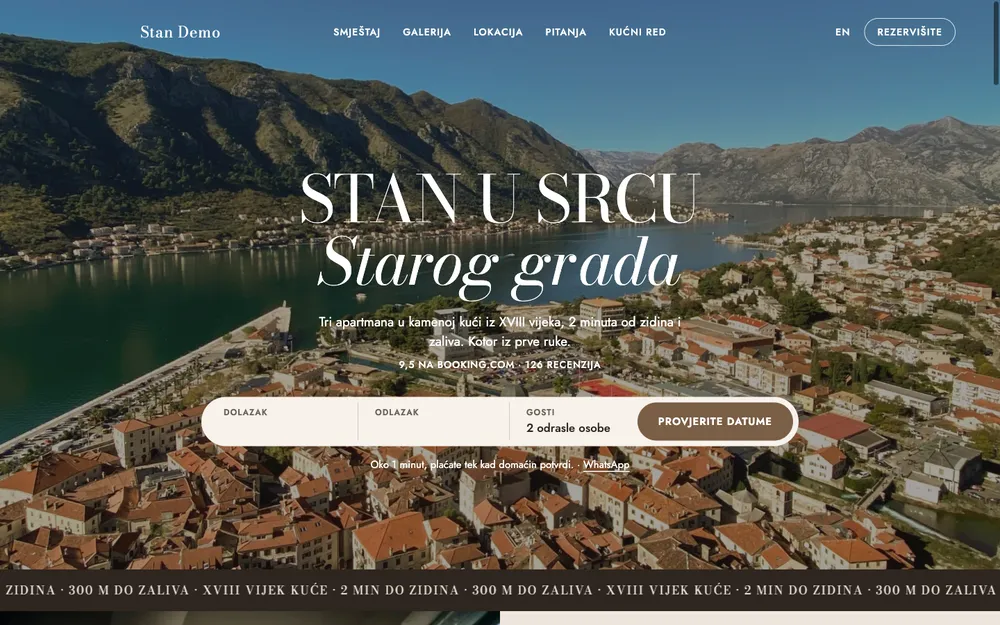
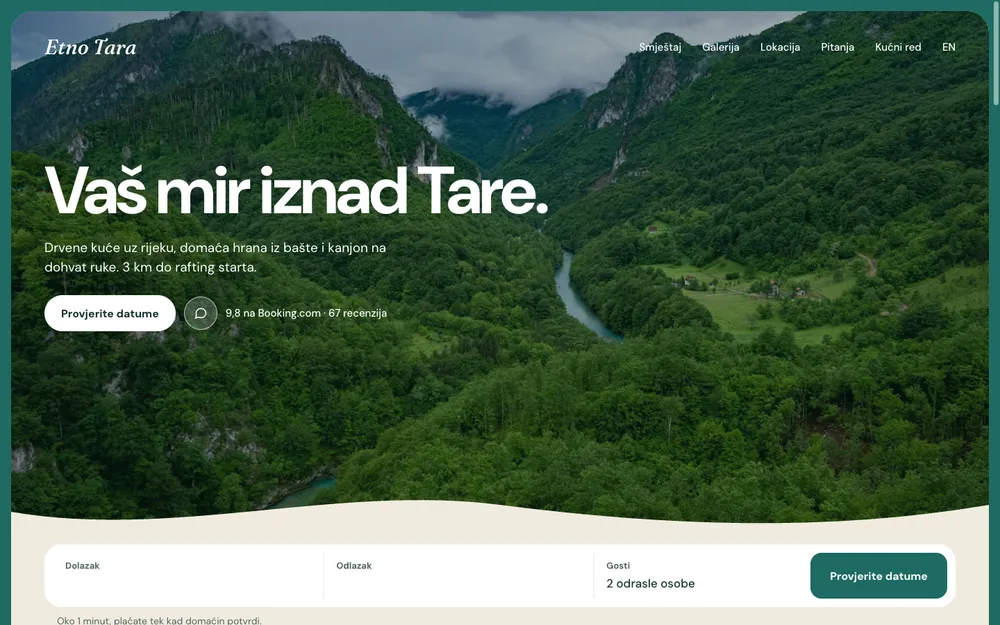
All themes are drawn by the same Blade template from the same sections: cover photo, units, guest reviews, gallery, location with distances, hosts, house rules, FAQ, extras and contact. The theme decides layout, fonts and colors. The host just fills in content and picks an accent color.
Changes go into a draft. The host previews it on their own address through a signed link and publishes when they're happy. If the same site is edited in two windows, the system notices and doesn't overwrite the first change.
An Inquiry, Not a Payment
On the website, the guest picks dates in the calendar, the number of people and any extras, such as breakfast, an airport transfer or cleaning. The price is calculated by season and for that number of nights, and the extras are added to the total.
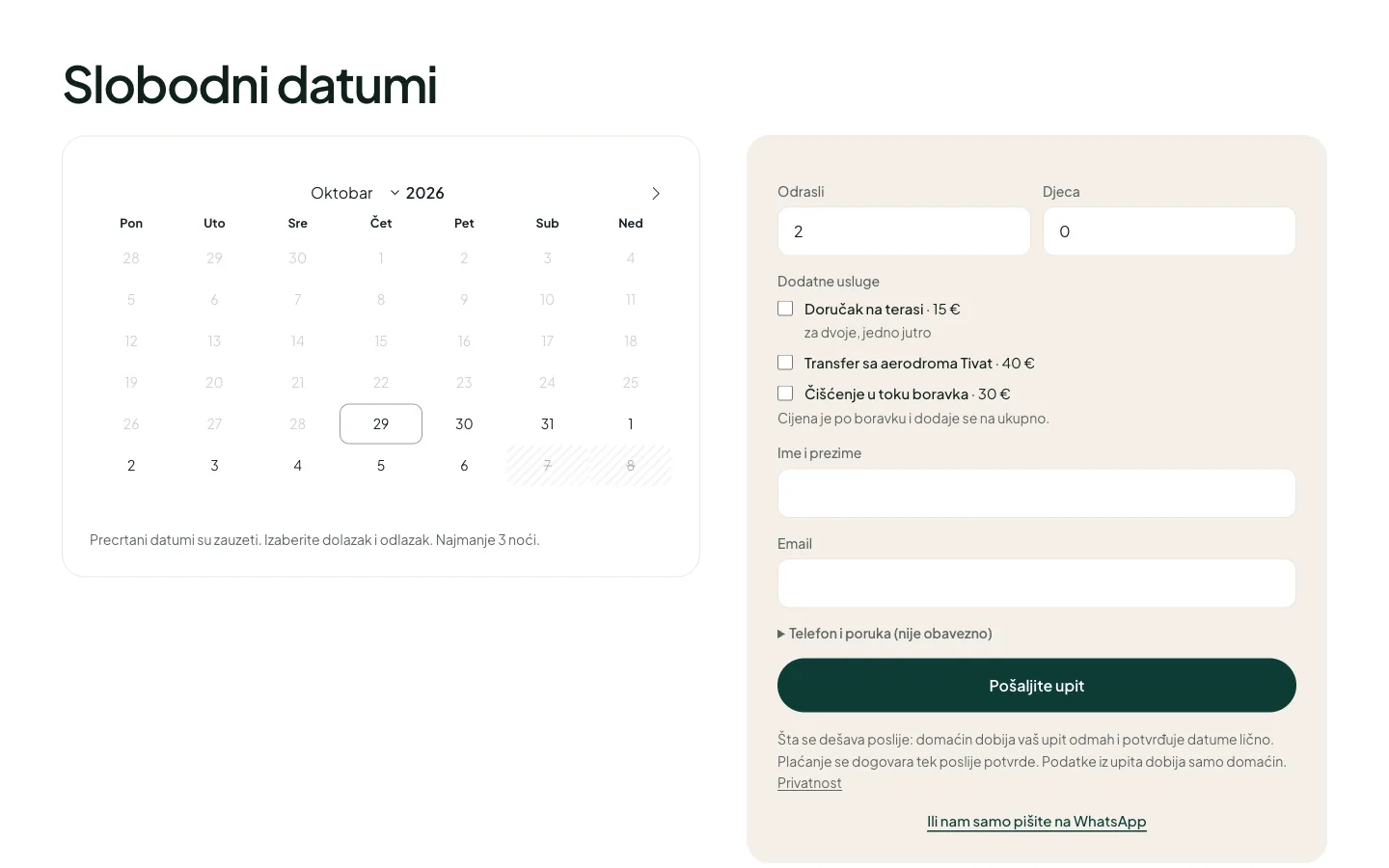
The flow is deliberately simple:
- The guest sends an inquiry. Nothing is charged, and the text under the button explains what happens next.
- The host gets a notification on their phone and by email, and confirms with one tap.
- The guest receives a confirmation with instructions for paying the deposit to the host's account, including a payment reference number.
- Before arrival, an email arrives with directions and where the keys are.
On the top plan, guests can also pay by card. On the others, the money goes straight to the host, with no middleman and no commission.
AI Assistant and Translations
Every site has an AI assistant that answers guests' questions about open dates, prices, parking or distance to the beach, using the information the host has already entered. When it doesn't know the answer, it logs the question, so the host sees what guests ask that the site doesn't say.
The site runs in eight languages: Montenegrin, Serbian, Bosnian, Croatian, English, German, Russian and Turkish. The host writes in their own language and AI handles the translations. For each field, the system remembers who wrote it and which text it was translated from. When the host changes the original, the translation is flagged as outdated and translated again, while anything the host corrected by hand stays theirs.
A Subscription Instead of a Project
Domazzo isn't sold as website development. It's a monthly subscription, with a 14-day trial and no card required.
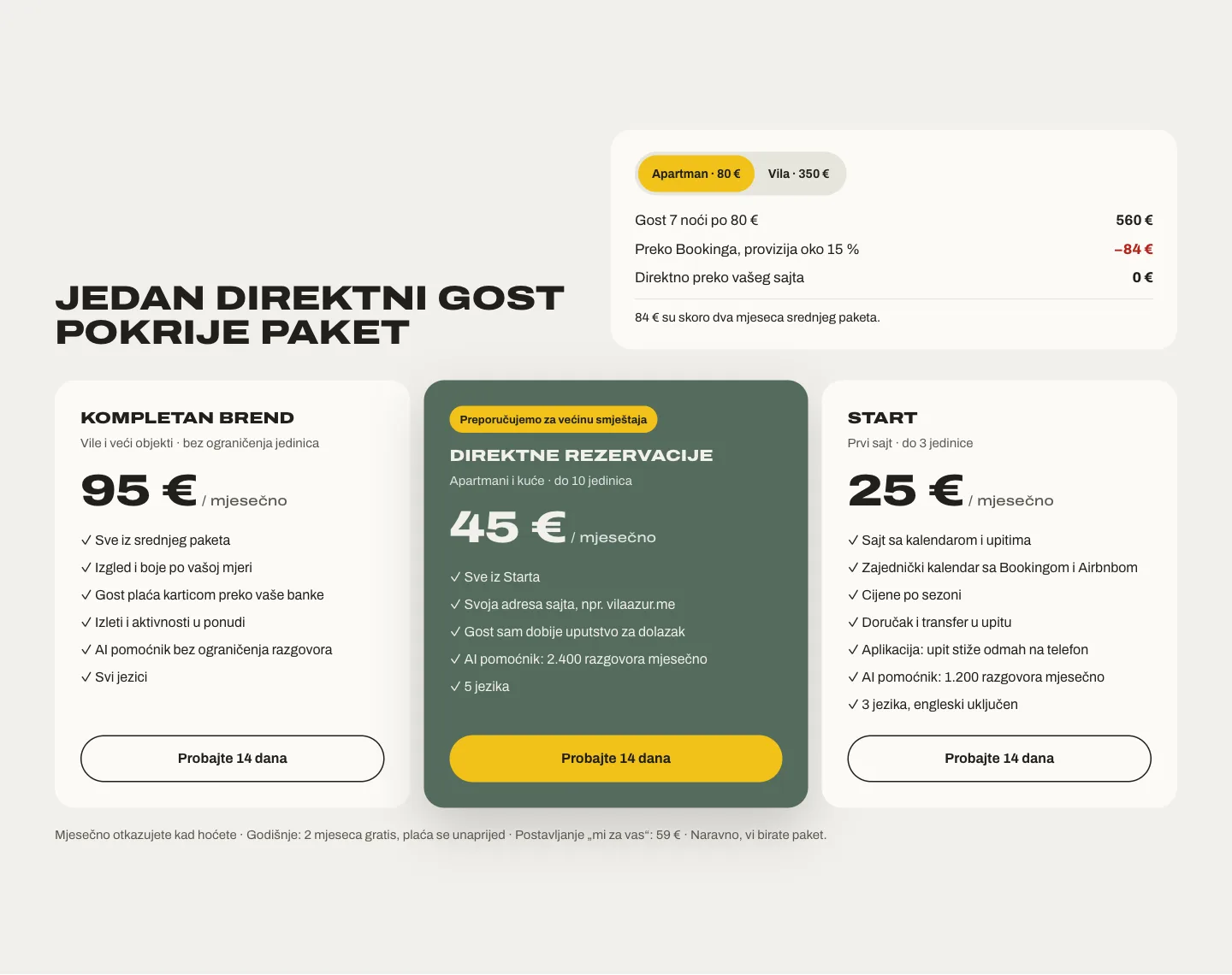
- Start, €25 a month: up to three units, a calendar synced with Booking and Airbnb, seasonal pricing, inquiries, the AI assistant and three languages.
- Direct bookings, €45 a month: up to ten units, your own website address, deposit instructions, guest emails and five languages.
- Complete brand, €95 a month: unlimited units and languages, a custom look and card payments.
The plans aren't three versions of the code. They're switches in the same system, so a host moves from one plan to another without migrating anything. An annual subscription costs ten months.
A host can set up a site on their own in about 15 minutes: describe the property, upload photos and connect the Booking calendar. Or they can send us their photos and the text from Booking on WhatsApp, and we'll build the site for €59.
Under the Hood
Platform: PHP 8.4, Laravel 13, iCal import and export, Laravel Cashier for subscriptions, web push notifications, the Anthropic API for the assistant and translations.
Host admin: Inertia, Vue 3 and TypeScript, with a FullCalendar calendar. Host websites: Blade and Tailwind CSS v4, no cookies or sessions for guests, with photos sized to what the screen actually needs.
Data security: every database query is tied to a host. If the host isn't known, the query returns nothing, so one host can't see another's data even through a coding mistake. A dedicated test guards this.
Scope: 22 data models, 58 migrations, 24 emails, 485 automated tests and more than 260 commits.
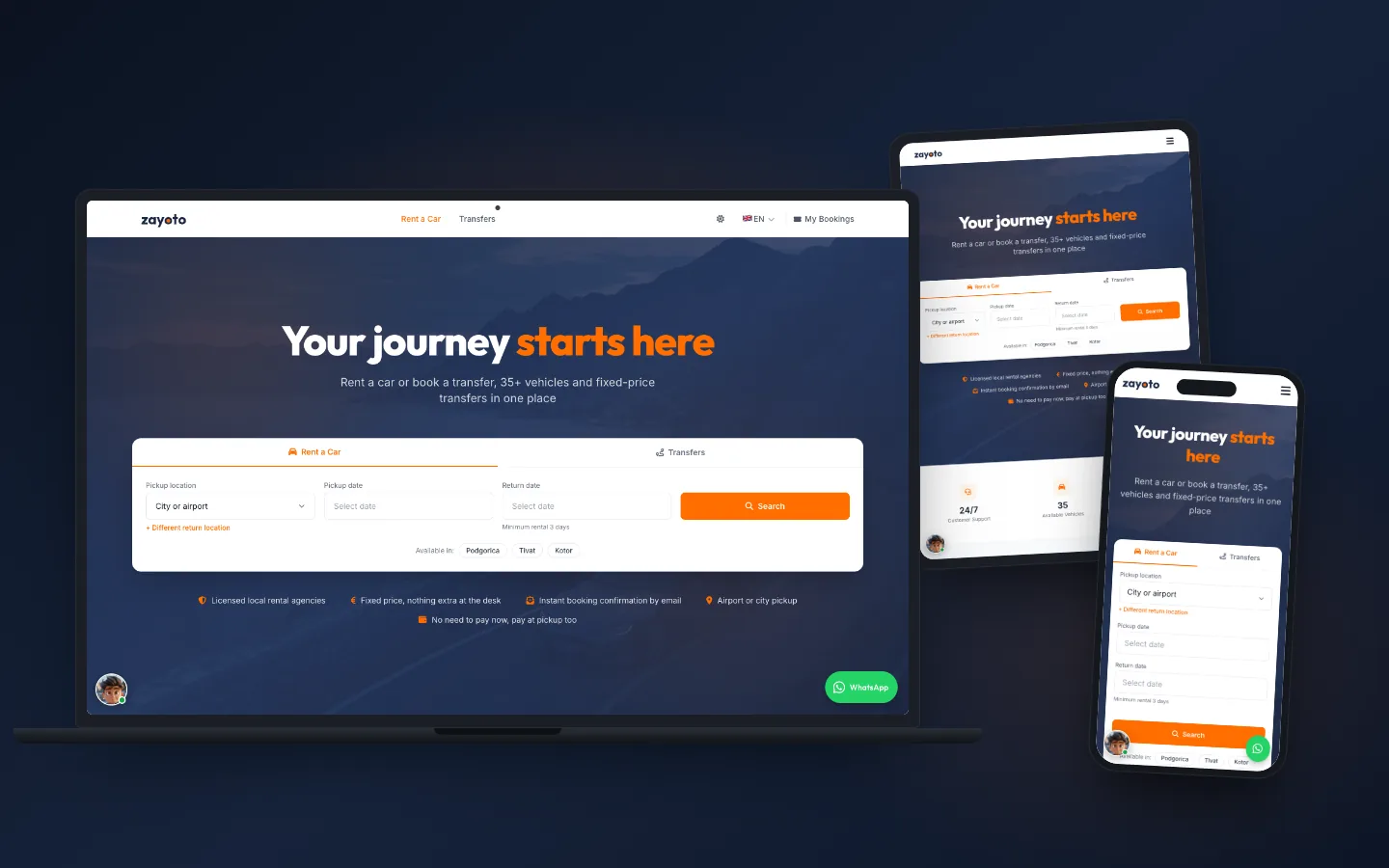
To see why a direct booking is worth more than it looks, read direct bookings vs. OTAs, and for a similar approach to rent-a-car and transfers, take a look at our Zayoto project.
Visit the Website
If you rent out accommodation and want your regular guests to book directly, you can try Domazzo for 14 days or get in touch and we'll look at your case. Have a look at the other projects in our portfolio.